Tomb World
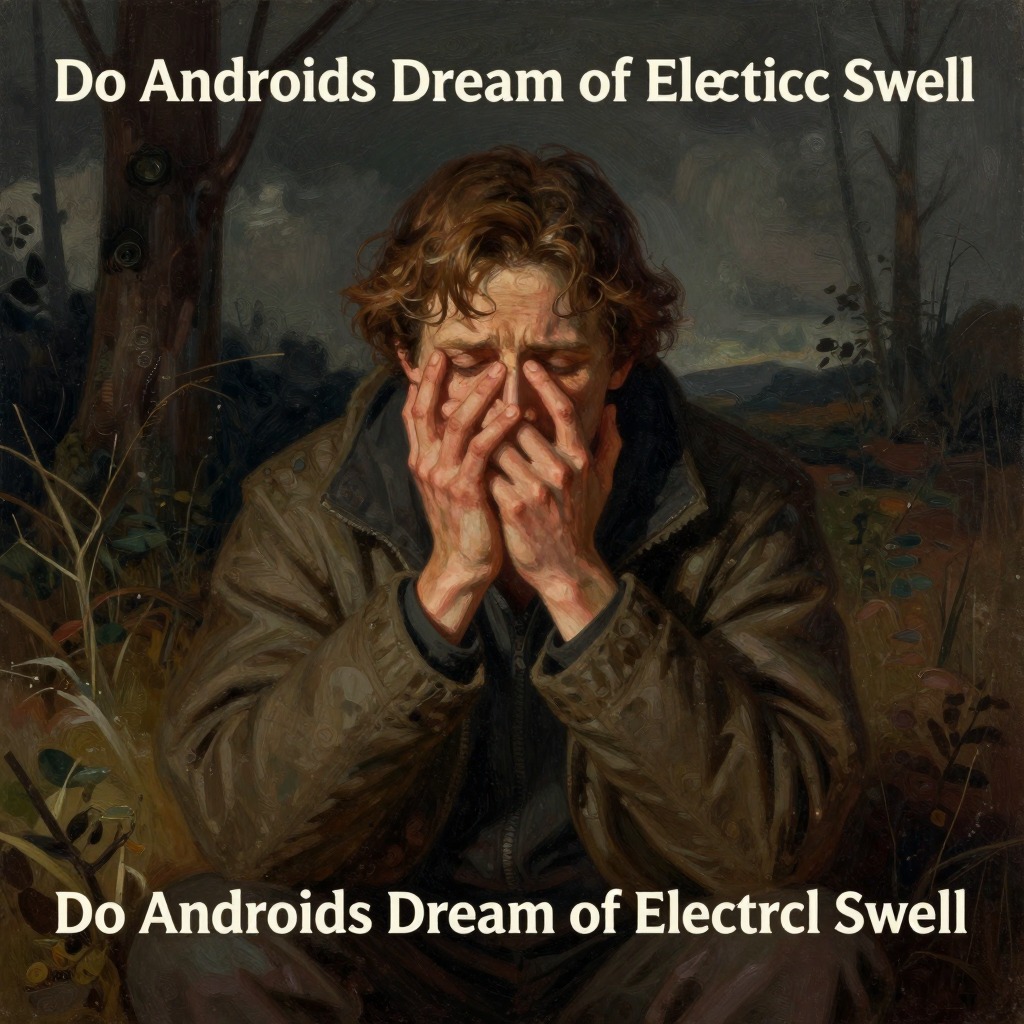
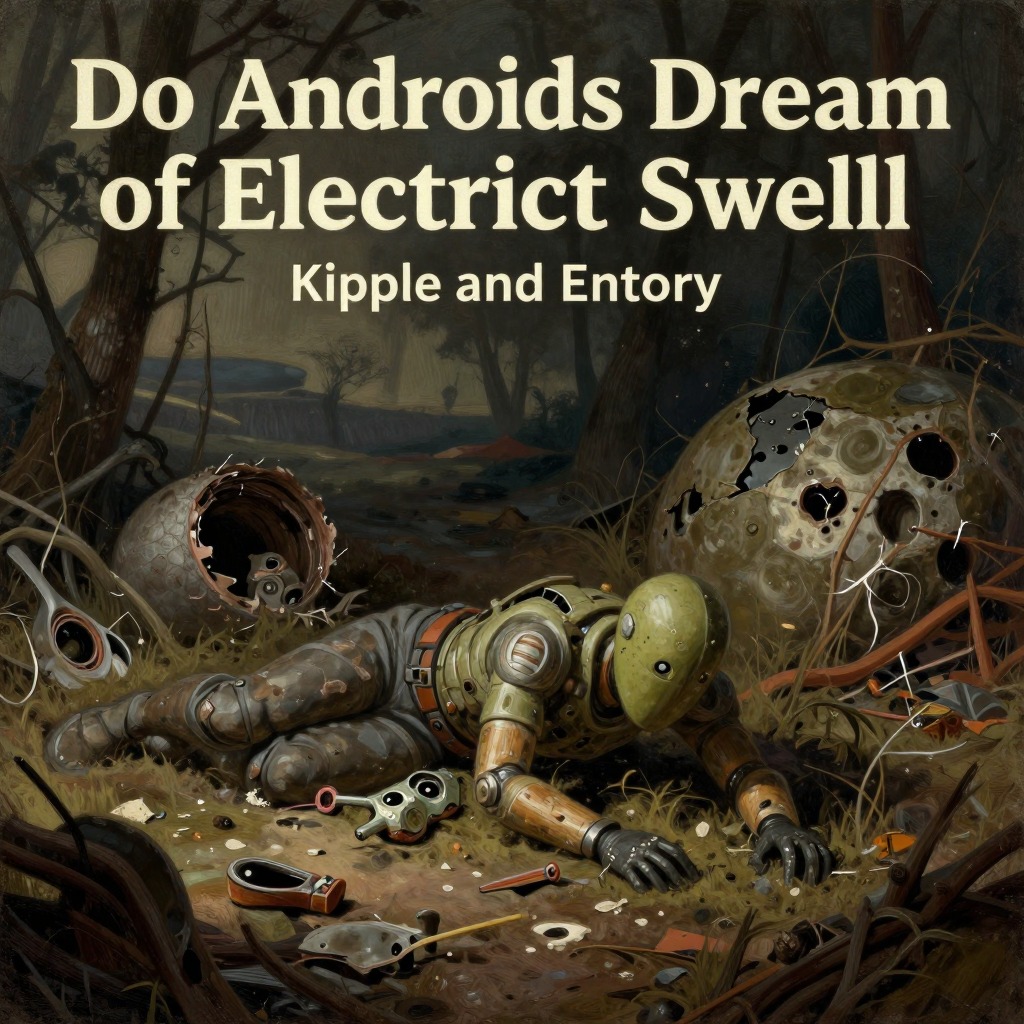
The Tomb World is the dark, inverted counterpart to the barren ascent of Wilbur Mercer, a realm of absolute decay and death into which Mercer periodically descends after being struck down at the summit of his hill. It is a place of corpses and dead bones, a pit where the creatures most important to Mercer—the donkey and especially the toad—have become extinct, leaving only rotting fragments, an eyeless head here, part of a hand there. This is not merely a physical location but a spiritual and psychological state, a sink of entropy that represents the ultimate defeat of creation, the curse that feeds on all life. For Mercer, the Tomb World is the necessary prelude to his resurrection; for those who fuse with him through the empathy box, it is a terrifying encounter with the void that lies beneath the surface of existence.
Origins and Nature
The Tomb World first appears in Mercer's own fragmented memories of his past. Before the curse came, he had lived a happier life, able to bring dead animals back to life through a time-reversal faculty. But local law prohibited this power, and when he was sixteen, the killers—the old antagonists—bombarded the unique nodule in his brain with radioactive cobalt, plunging him into a different world whose existence he had never suspected. This was the Tomb World: a pit of corpses and dead bones where he struggled for years to get up. The donkey and the toad, the creatures most important to him, had vanished; only rotting fragments remained. A bird that came there to die told him where he was: he had sunk down into the tomb world, and he could not get out until the bones strewn around him grew back into living creatures. He had become joined to the metabolism of other lives, and until they rose, he could not rise either. This cycle—descent into the Tomb World, then gradual ascent—became the eternal pattern of Mercerism.
The Experience of the Tomb World
For those who grasp the handles of the empathy box, the Tomb World is not a distant myth but a visceral reality. When John Isidore, after witnessing the androids mutilate a spider and hearing Buster Friendly's exposé of Mercerism as a fraud, sinks into a profound depression, he finds himself in the Tomb World once again. The depression caused by the sagging of the floor manifests pieces of animals: the head of a crow, mummified hands that might have once been parts of monkeys. A donkey stands a little way off, not stirring, and before Isidore can reach it, a shiny blue crow picks out the donkey's eyes. The dry wind rustles, and around him the heaps of bones break. Even the wind destroys them at this stage, just before time ceases. Isidore looks up and sees nothing to grasp. This is the Tomb World in its purest form: a place where decay has become the only process, where even the act of destruction eventually ceases, leaving only an eternal, static desolation.
The Tomb World and the Cycle of Mercerism
The Tomb World is integral to the cyclical structure of Mercerism. As Rick Deckard reflects, in Mercerism everyone ascends together or, when the cycle has come to an end, falls together into the trough of the Tomb World. The ascent is the climb up the barren hill, the fusion with Mercer and all other living beings; the descent is the fall into the pit of death and decay. But the cycle is not a simple binary: it is a continuous process of death and rebirth. Mercer himself tells Isidore, when Isidore asks if the sky is painted and if the brushstrokes show up under magnification, that the androids' research is sincere and that from their standpoint he is an elderly retired bit player named Al Jarry. Yet Mercer also says that nothing has changed: "Because you're still here and I'm still here." He lifts Isidore from the Tomb World and will continue to lift him until he loses interest and wants to quit. The Tomb World, then, is not a final destination but a necessary stage in an eternal recurrence, a place from which Mercer—and those who fuse with him—must rise again.
The Tomb World and the Nature of Reality
The Tomb World also serves as a profound commentary on the nature of reality and the distinction between the authentic and the artificial. When Deckard, after retiring the last of the androids and discovering that his goat has been killed by Rachael Rosen, flies to the desolate landscape near the Oregon border, he experiences a solitary ascent that mirrors Mercer's. He is struck by a real rock, not a rubber or soft foam plastic one, and the pain touches him throughout in its undisguised actual form. He realizes that he has become Mercer, that he has permanently fused with him and cannot unfuse. The Tomb World, in this context, is not a place one visits through the empathy box but a state of being that one can inhabit alone, without the comfort of fusion with others. It is the ultimate isolation, the recognition that the curse that feeds on all life is not a fraud but a fundamental condition of existence. And yet, even in this desolation, Deckard finds a toad—an animal believed extinct—and though it later turns out to be electric, the moment of discovery restores his sense of wonder. The Tomb World, it seems, is not the final word; even there, life—or its simulacrum—can be found.